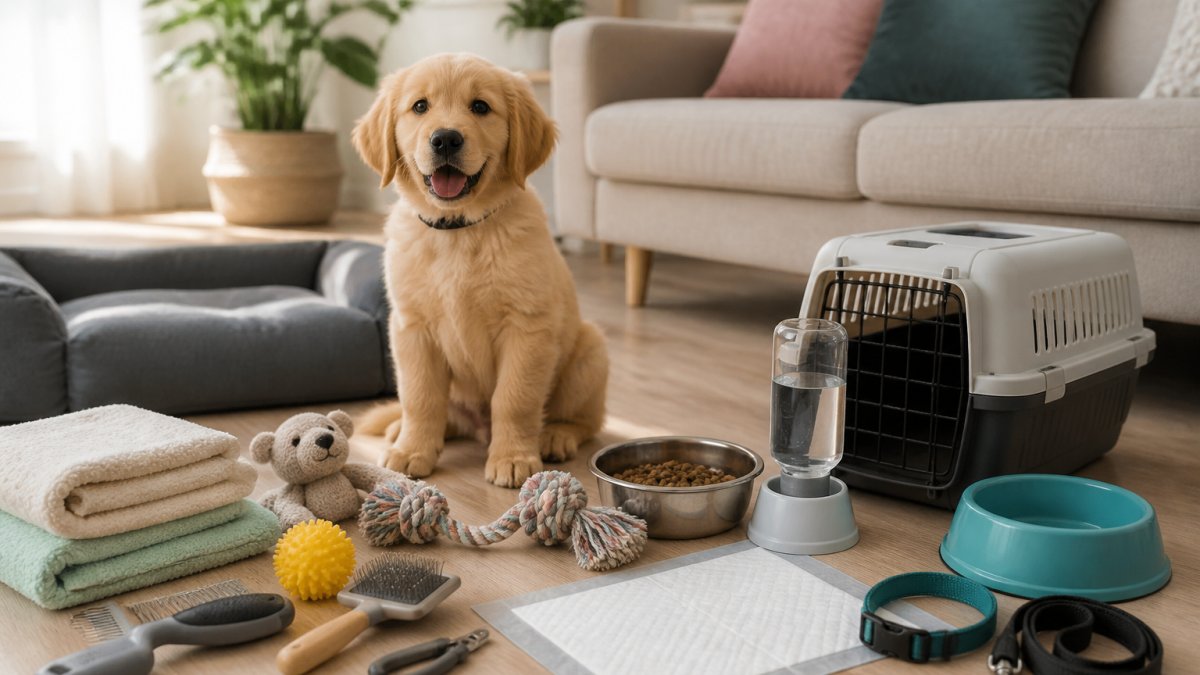
What Essential Pet Supplies Do New Owners Really Need?
Getting a new pet is exciting, but you’ll need more than toys and treats. Essential pet supplies for new owners include food, housing, safety items, and enrichment tools. Planning ahead makes the difference between a prepared owner and a stressed one.
At Mega Picks Oasis, we help new pet owners navigate a confusing marketplace with carefully selected products.
New Pet Owner Checklist: Before You Bring Your Pet Home
Before your pet arrives, establish the essentials. This isn’t about perfection; it’s about having non-negotiable items ready so you can focus on bonding.
Food and Water Essentials
Start with appropriately sized stainless steel or ceramic bowls, which resist staining and harbor fewer bacteria than plastic. Choose pet food formulated for your pet’s age and size, puppies and kittens need different nutrition than adults. Quality pet food lists meat as the first ingredient, not grain fillers.
Provide water constantly; some pets prefer fountains, which encourage hydration. A feeding mat contains spills, protects flooring, and creates a designated feeding zone that aids training.
Housing and Bedding
Your pet needs a safe space to sleep and retreat. For dogs, a crate serves as both den and housebreaking tool. For cats, a bed or designated corner works. Bedding should be washable and temperature-appropriate, thicker for cold climates, cooling mats for warm areas.
Health and Safety Supplies
A first-aid kit specifically for pets is essential. Include bandages, antiseptic wipes, tweezers, and any medications your veterinarian recommends. Store it in an easily accessible location.
Identification is non-negotiable. A collar with an ID tag and a microchip are your backup systems if your pet escapes. Schedule a veterinary checkup before or immediately after bringing your pet home.
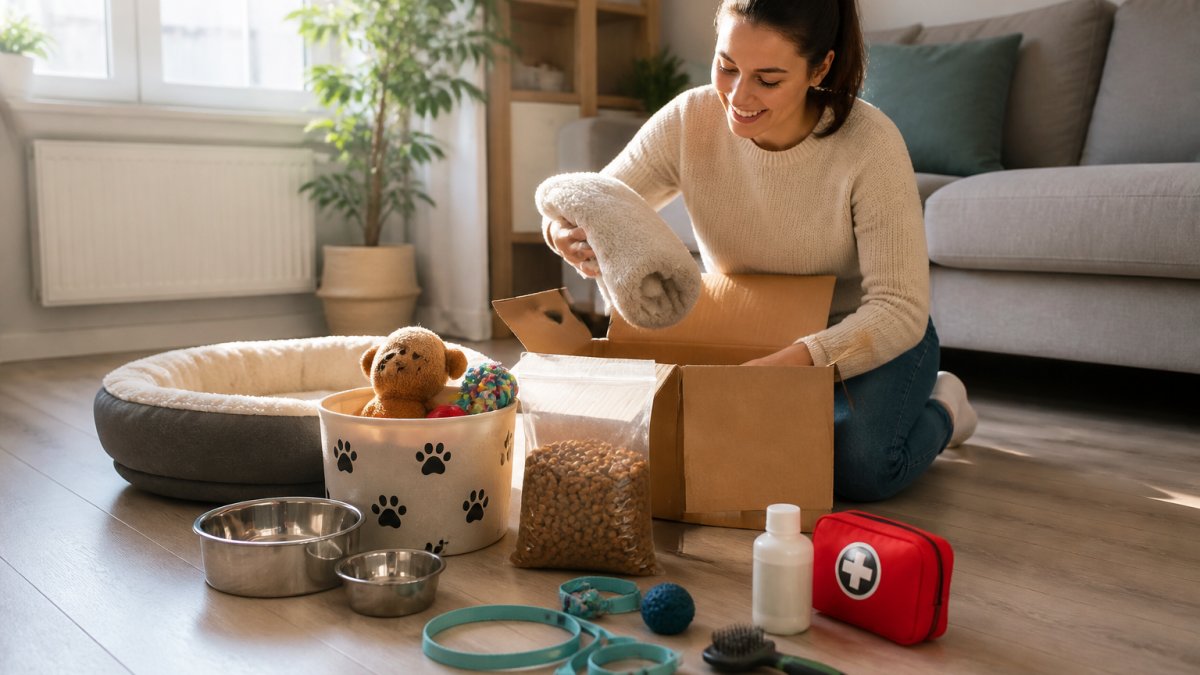
New pet owner unpacking and arranging essential supplies including food bowls, bedding, toys, collar, and first-aid items on a living room floor with natural sunlight
New Puppy Supplies Checklist: Getting Started Right
Puppies have specific needs that differ significantly from adult dogs. They’re growing rapidly, learning constantly, and exploring everything with their mouths.
Training and Housebreaking Essentials
Housebreaking pads manage accidents indoors; gradually move them toward the door and outside. A clicker marks the exact moment your puppy does something right, followed by a reward, this precision accelerates learning faster than verbal praise alone.
Use enzymatic cleaner for accident cleanup. Regular cleaners don’t fully remove scent markers that tell puppies “this is an acceptable bathroom spot.” Enzymatic cleaners break down urine compounds completely, preventing repeat accidents.
Toys and Enrichment for Puppies
Puppies need soft toys for fetch, durable chew bones for teething, and puzzle toys for mental stimulation. Rotate toys weekly to maintain novelty. Cold toys (frozen briefly) provide relief to sore gums during teething.
Enrichment toys that dispense treats keep puppies mentally engaged during alone time and prevent destructive behavior.
New Kitten Supplies Checklist: Essential Items for Cats
Kittens have different requirements than puppies. They’re independent, climb, and have strong instinctual behaviors around elimination and scratching.
Litter Box Setup and Maintenance
Provide one litter box per cat plus one extra. Even with one kitten, two boxes prevent territorial stress and provide options if one becomes soiled. Place boxes in separate locations away from food and water.
Litter type matters, some kittens prefer fine-grain, others larger pellets; some are sensitive to scent. If your kitten avoids the box, try a different litter type. Enzymatic cleaner removes odors and daily scooping prevents buildup.
Scratching Posts and Enrichment
Scratching is a necessity, not a behavior problem. Provide scratching posts, pads, or cardboard scratchers in multiple locations. Vertical posts also serve as climbing structures for exercise and security.
Provide climbing structures and hiding spots; vertical space is crucial for cats. Interactive play with toys on strings or wands mimics hunting behavior and reduces destructive behavior.
Pet-Proofing Supplies: Creating a Safe Home Environment
Your home contains hazards you haven’t considered. Pet-proofing isn’t just about removing obvious dangers; it’s about understanding which risks are most urgent.
Toxic Substances: Priority One
Medications and supplements: Store all human medications in a locked cabinet or high shelf. Even a single tablet can be toxic.
Cleaning products and chemicals: Lock under-sink cabinets with childproof latches. These products cause chemical burns.
Pesticides and rodent control: Never use rodent poison or insecticide where pets have access. Store in a locked cabinet or sealed container.
Antifreeze and coolants: Highly toxic and sweet-smelling. Store in sealed containers. A single teaspoon can be fatal to a cat.
Xylitol-containing products: This artificial sweetener is found in sugar-free gum, candy, baked goods, and some peanut butters.
Toxic Plants: Know What to Remove or Relocate
Common toxic plants include lilies (especially dangerous to cats), sago palm, oleander, dieffenbachia, philodendron, azaleas, rhododendrons, and foxglove. Move them to inaccessible rooms or remove entirely. If ingestion occurs, contact your veterinarian or ASPCA Animal Poison Control Center (888-426-4435) immediately.
Choking Hazards and Intestinal Blockages
Small objects like coins, buttons, rubber bands, hair ties, string, and dental floss cause intestinal obstruction. Keep these in closed drawers. Cooked bones, corn cobs, avocado pits, and peach pits are hazardous. Use a locking trash bin.
Choose toys rated for your pet’s size and chewing intensity to prevent ingestion of foam or stuffing. Store plastic bags in cabinets and remove packaging immediately after opening boxes.
Electrical and Physical Hazards
Electrical cords: Use cord protectors ($8-$20 per pack) or hide cords behind furniture.
Secure furniture and heavy items: Tall bookshelves, televisions, and unstable furniture can topple if a pet jumps or climbs on them. Secure heavy furniture to the wall with furniture straps or brackets ($15-$40 per strap).
Window and door safety: Ensure screens are secure and cannot be pushed out. Use window locks and door stops to prevent accidental opening.
Stairways: For puppies, kittens, or elderly pets, use baby gates at the top and bottom of stairs to prevent falls. Gates cost $30-$80 depending on size and material.
Specific Pet-Proofing Products
Cabinet locks and latches: Childproof locks ($5-$15 per pack) work on cabinet doors and drawers. Magnetic locks are more secure than simple latches.
Baby gates: Pressure-mounted gates ($30-$60) work in doorways without installation. Hardware-mounted gates ($50-$100) are more secure for pets that jump or push hard.
Cord protectors: Plastic tubing ($8-$20 per pack) prevents chewing. Bitter-tasting sprays ($8-$15 per bottle) can also deter chewing, though effectiveness varies.
Trash cans with locking lids: Step-on cans with locking mechanisms ($40-$80) prevent pets from tipping or opening the lid.
Furniture straps and anchors: Heavy-duty straps ($15-$40 each) secure tall furniture to walls, preventing tip-overs.
Creating a Pet-Safe Room
When you first bring your pet home, confine them to a single room (bedroom, bathroom, or laundry room) that you’ve thoroughly pet-proofed. This reduces hazards and makes supervision easier. Gradually expand their access as they prove trustworthy.
A pet-safe room should include food and water bowls, bedding or crate, litter box (for cats), toys and enrichment, no toxic plants or chemicals, secure electrical cords, and a way to prevent escape.
Budgeting for Your First Year: Startup and Ongoing Costs
Understanding the financial commitment helps you plan realistically. Initial startup costs differ from ongoing monthly expenses.
First-Month Startup Costs
Food and water supplies: $30-$60 for bowls, feeding mat, and initial food supply.
Collar, leash, and ID: $25-$60 for a collar, leash, and engraved ID tag. Microchipping costs $25-$50.
First-aid and health supplies: $30-$75 for a pet first-aid kit, nail clippers, brush, and initial medications.
Toys and enrichment: $40-$100 for a starter set appropriate to your pet’s age and size.
Litter box setup (cats only): $30-$80 for litter boxes, litter mat, scoop, and initial litter supply.
Total first-month startup: $195-$575 for a dog; $145-$415 for a cat.
Veterinary Costs in Year One
Initial wellness exam: $50-$150.
Vaccinations: $75-$200 for the initial series. Annual boosters cost $50-$100 per visit.
Parasite prevention: $150-$300 annually for flea, tick, and heartworm prevention.
Spay or neuter surgery: $200-$500, depending on your pet’s age, size, and location. Many shelters offer reduced rates ($75-$300).
Microchip registration and updates: $0-$25 annually.
Total first-year veterinary: $475-$1,150 for routine care alone.
Monthly Ongoing Costs
Pet food: $30-$80 monthly for a small dog; $60-$150 for a large dog. Cat food typically costs $20-$50 monthly.
Litter (cats): $15-$40 monthly, depending on litter type and number of cats.
Preventive medications: $15-$30 monthly for flea, tick, and heartworm prevention.
Treats and chews: $10-$30 monthly.
Toys and supplies replacement: $10-$25 monthly.
Total monthly recurring: $70-$175 for a dog; $45-$120 for a cat.
Annual Costs Beyond Year One
Routine veterinary care: $200-$400 annually.
Grooming (dogs): $300-$1,200 annually, depending on breed and coat type.
Dental care: $200-$400 for annual professional cleaning.
Total annual costs (years 2+): $800-$2,200 for a dog; $540-$1,320 for a cat, excluding emergencies.
Planning for Emergencies
Emergency veterinary visits costs vary depending on the condition. Consider pet insurance (costs vary monthly, typically covering a percentage of veterinary costs after a deductible) or set aside a dedicated pet emergency fund.
Cost-Saving Strategies
Buy food in bulk, larger bags cost less per pound. Use preventive care; annual exams and parasite prevention cost far less than treating advanced disease. Choose quality food, which often reduces veterinary bills by supporting better digestion and weight management. Brush your dog’s coat regularly and trim nails at home to reduce professional grooming frequency. Adopt from shelters; many animals are already spayed/neutered and microchipped, which can reduce first-year costs.
Selecting Quality Pet Supplies: What to Look For
Not all pet supplies are created equal. Durability, safety, and function matter more than brand recognition.
Read ingredient labels on pet food. The first ingredient should be meat, not grain or by-products.
Check material safety for bedding and housing. Avoid materials that off-gas toxic fumes or contain flame retardants.
Research reviews from other pet owners with similar pets. Real user feedback tells you whether the product delivers on its promises.
Getting the right essential pet supplies for new owners isn’t about buying everything in the pet store.
The first few weeks with your pet set the tone for years together.
Frequently Asked Questions
What supplies do new pet owners need before bringing a pet home?
Essential pet supplies include food and water bowls, appropriate pet food, a bed or crate, collar and leash, toys, grooming tools, a first-aid kit, and cleaning supplies for accidents. For puppies, add training pads and training clickers. For kittens, include a litter box and scratching post. Your veterinarian can recommend additional items based on your pet’s age, size, and health needs.
What should I include in a new puppy supplies checklist?
A new puppy supplies checklist should include puppy-formula dog food, food and water bowls, a crate for training, training pads for housebreaking, a collar and leash, chew toys and chew bones appropriate for puppies, grooming tools like brushes, a first-aid kit, and calming products if your puppy shows anxiety. Start with these items before bringing your puppy home to avoid gaps in care.
What are the most important supplies for a new kitten?
New kittens need kitten-formula food, food and water bowls, a litter box, litter, a scratching post, toys, a bed, grooming tools, and a first-aid kit. Kittens also benefit from anxiety relief products or anxiety vests if they show stress during the transition. A collar and ID tag are important for safety and identification. Ensure all items are appropriately sized for kittens.
How much should I budget for essential pet supplies in the first year?
First-year costs vary based on pet size, species, and age. Budget for initial supplies (food bowls, bedding, toys, grooming tools), ongoing pet food and nutritional supplements, preventive care including vaccines, and emergency supplies. Realistic planning accounts for both startup costs and monthly expenses. Visit Mega Picks Oasis for current pricing on quality supplies that fit your budget.
Are there pet supplies I can wait to buy until after bringing my pet home?
You can delay some items like advanced training tools, specialty toys, and additional enrichment items. However, do not wait on essentials: food, water bowls, bedding, collar, leash, litter box (for cats), and a first-aid kit should be ready before arrival. Pet-proofing supplies and safety items should also be in place to prevent accidents and injuries.
What pet supplies are safe for puppies and kittens?
Choose toys without small parts that can be choking hazards, use chew toys designed for their age, and select collars that fit properly without pinching. Avoid toxic materials and opt for durable, non-toxic bedding. Check grooming tools for safety, and select food appropriate for their life stage. Always verify that supplies meet safety standards and consult your veterinarian about age-appropriate products.