Best Budget Friendly Home Products 2026: Smart Upgrades Under $100
The best budget friendly home products 2026 cut a recurring cost or replace a chore, not just look nice on a shelf. Start with small connected devices: smart plugs, smart bulbs, and entry-level cameras, the budget friendly home products that pay for themselves through lower energy waste and fewer security worries.
Smart plugs sit between a wall outlet and a device, letting you schedule or remotely control power to lamps, fans, and space heaters. The U.S. Department of Energy guidance on lighting choices notes that LED bulbs use far less energy than incandescent options, making the switch one of the easiest wins in any home.
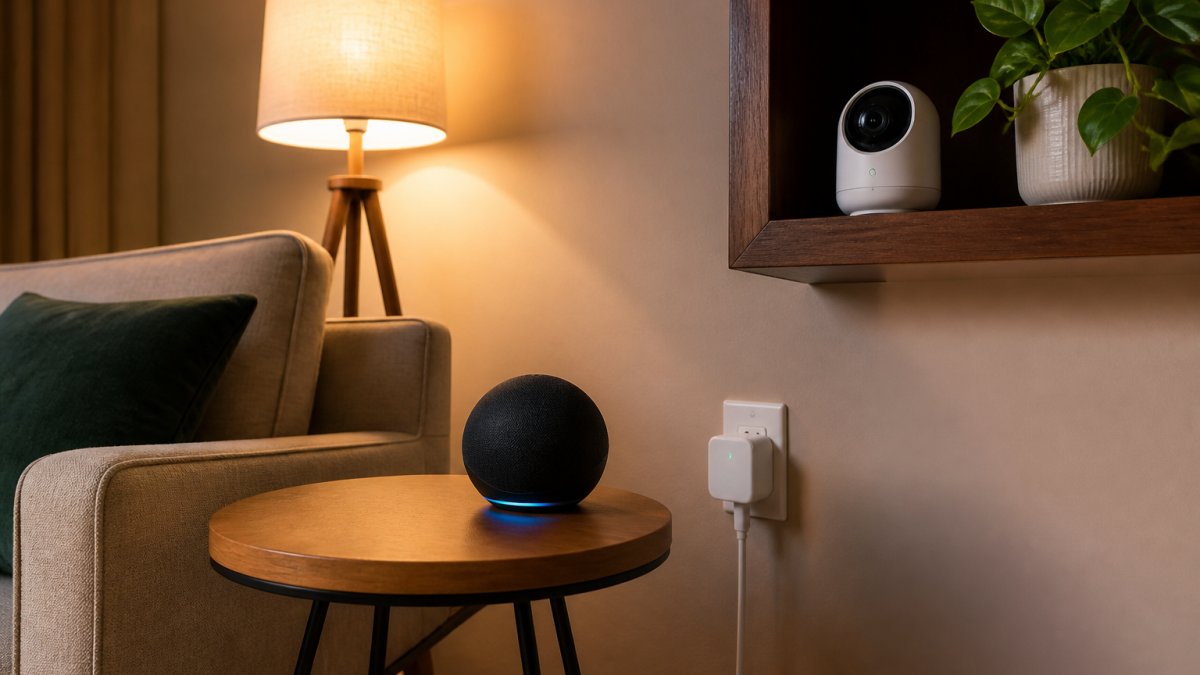
A cozy living room corner with a smart speaker on a side table, a smart plug in the wall outlet, and a small indoor camera on a shelf, all lit by warm ambient light from a smart bulb
Pro Tip Buy smart plugs that list energy monitoring as a feature. Seeing which device draws the most power often changes buying habits more than any general advice about saving electricity.
Smart Plugs and Bulbs That Cut Energy Waste
Energy waste is the quiet line item in most household budgets. A lamp left on for hours, a charger drawing power with nothing plugged in, a porch light running dusk to dawn: none of it feels expensive until you add it up. Smart plugs and bulbs solve this with schedules and timers, and they are among the most affordable connected devices you can buy.
Look for three things when comparing options:
Scheduling that works without a hub or subscription
Energy monitoring on at least one plug per room
Bulbs with adjustable warmth, so one fixture covers both task and mood lighting
The main drawback is app sprawl. Every brand wants its own app, and managing five gets old fast. Stick to one ecosystem where you can, even if a rival product is slightly cheaper.
Budget Security Cameras and Video Doorbells
Entry-level cameras and video doorbells now cover basics that used to cost far more: motion alerts, night vision, two-way audio, and local or cloud storage. For renters especially, a plug-in indoor camera and a battery doorbell deliver most of the peace of mind of a full system without wiring or a contract.
Two caveats matter. Cloud storage plans add up over time, so check whether local storage is supported before you commit. And cheap cameras vary widely in night video quality, which is exactly when you need them most. Read the fine print on resolution and field of view rather than trusting the box.
How to Decorate Home on a Budget: Designer Looks for Less
Learning how to decorate home on a budget comes down to three levers: texture, light, and restraint. You do not need new furniture to change how a room feels. Swapping textiles, adjusting lighting, and editing what is already there can shift a space more than any single purchase. This is where budget friendly home products earn their keep, because the smallest items often carry the biggest visual weight.
Key Takeaway Designers rarely fill a room in one shopping trip. They layer it slowly, one texture and one light source at a time. Copy the process, not the price tag.
Thrifted and DIY Decor That Looks Curated
Curated rooms share one trait: nothing looks like it arrived in a matching set. Thrift stores, estate sales, and marketplace listings are full of solid wood frames, ceramic vases, and brass hardware that mass-produced pieces imitate poorly. A coat of matte spray paint on a dated frame or a swapped lamp shade turns a find into something that fits your space.
The trick is a consistent palette. Pick two or three colors and let every secondhand piece fall inside them. Without that filter, thrifted decor reads as clutter instead of a collection.
Lighting and Textile Swaps for Instant Warmth
Lighting and textiles are the fastest, cheapest way to warm up a room. Cool-white overhead bulbs make any space feel like an office; swapping to warm-white bulbs, adding a floor lamp, and layering a throw and two cushion covers changes the mood in an afternoon.
A simple rule we share with shoppers: aim for three light sources per room at different heights. One overhead, one table or floor lamp, one accent. It costs little and reads as intentional design.
Eco-Friendly Home Essentials on a Budget That Actually Last
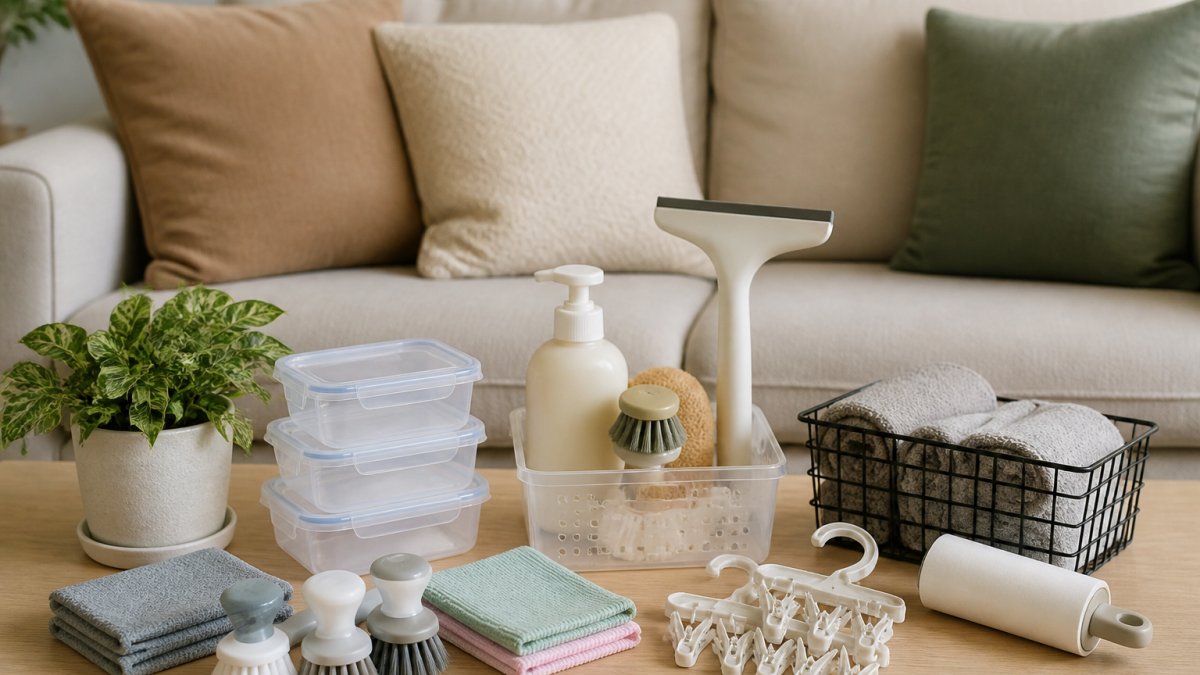
Eco-friendly home essentials on a budget are not a contradiction. The cheapest item over time is usually the one you replace least often. Reusable cloths, glass storage containers, wool dryer balls, and refillable cleaning bottles cost more upfront than disposables and less within a few months of regular use.
The U.S. Environmental Protection Agency’s recommendations on reducing household waste point in the same direction: cutting single-use items at the source beats recycling them later. Where budget products fail is durability. A bargain bin cloth that sheds after ten washes is not eco-friendly, it is just cheap. Check reviews for wear over time, not just first impressions.
Essential
Replaces
Why It Lasts
Reusable microfiber cloths
Paper towels
Washable hundreds of times
Glass storage containers
Plastic wrap and bags
No staining or odor retention
Wool dryer balls
Dryer sheets
Reusable for years
Refillable spray bottles
Single-use cleaners
Refill from concentrate
Kitchen Gadgets and Space-Saving Tools Worth Buying
Kitchen gadgets earn their place only if they replace something you already do by hand.
The more useful question is which categories consistently deliver value under $50 and which quietly fail.
Consistent winners under $50
Immersion blenders. Replace a full-size blender for soups, sauces, and smoothies. Look for a detachable stainless shaft and at least two speed settings. They store in a drawer, which matters more than wattage for most home cooks.
Digital instant-read thermometers. The single cheapest way to stop overcooking chicken and pork. A basic model with a folding probe and a two-to-three second read is enough; you do not need a Bluetooth version for weeknight cooking.
Adjustable mandoline slicers. Cut prep time on vegetables and replace a bulky food processor for slicing tasks. Buy one with a hand guard and a folding blade, the guard is not optional.
Silicone spatulas and spoonulas. One heat-resistant set replaces three cheap plastic tools that warp and scratch nonstick pans.
Stackable mixing bowls with lids. Serve as prep bowls, storage, and serving vessels. Nesting sets free cabinet space that fixed bowls waste.
Space-saving tools for small kitchens
Stackable mixing bowls, collapsible colanders, over-the-sink cutting boards, and magnetic knife strips free up cabinet and counter room without a renovation.
Look for dishwasher-safe materials and metal or silicone construction over thin plastic, which warps and cracks.
Smart kitchen add-ons on a budget
A smart plug paired with a slow cooker or coffee maker lets you schedule start times without buying a connected appliance.
Pro Tip Before buying any gadget, name the specific task it replaces and how often you do that task. If you cannot name both, skip it. The junk drawer is built one impulse purchase at a time.
Watch Out Avoid single-purpose gadgets that only do one narrow job, avocado slicers, banana slicers, egg separators. They are the fastest route to a junk drawer full of things you never touch again, and they rarely survive a year of regular use.
What to skip
Air fryers under $40 often have small baskets and short warranties; if you want one, save for a mid-range model rather than the cheapest option.
Cleaning and Organization Essentials for a Tidy Home
Clear bins win over opaque ones because you can see contents without opening them. Latching lids beat snap-on lids for garages, basements, and attics.
Match the bin to the job:
Under-bed: low-profile, latching, on wheels if the floor is hard
Closet shelves: fabric or woven, labeled on the front edge
Garage or utility: heavy-duty plastic with gasketed lids
Kids’ rooms: open bins at kid height, so cleanup does not require an adult
A maintenance routine that keeps the system working
Most organization systems fail in month two, not week one.
Key Takeaway The system is not the bins. The system is the fifteen-minute weekly reset. Bins just make the reset faster.
What to skip
Matching sets of decorative bins bought before you declutter. Vacuum-sealed bags for anything you will need within a month.
Maintenance Tips to Make Budget Products Last Longer
Maintenance is where the real savings hide. A few habits stretch the life of almost everything you buy.
Smart plugs and bulbs: Keep them away from direct heat and moisture, and update firmware when prompted.
Textiles: Wash throws and covers on cold and air-dry where possible to prevent pilling.
Kitchen tools: Hand-wash blades and nonstick surfaces even if the label says dishwasher safe.
Storage bins: Avoid overloading, since cracked lids are the number one reason bins get replaced.
A common mistake is treating budget items as disposable. Treat a cheap tool like a good one and it often lasts nearly as long.
Conclusion: Smart Shopping for a Better Home
The challenge with budget home shopping is separating genuine value from a convincing discount. The products that matter cut a bill, replace a chore, or last through years of daily use. That is the standard we apply at Mega Picks Oasis. Shoppers get 10% off a first order and access to exclusive deals, all backed by a shopping experience built on confidence rather than guesswork. Get started with Mega Picks Oasis and upgrade your home without stretching your budget.
Frequently Asked Questions
What are the best home upgrades under $50 for 2026?
Focus on high-impact, low-cost swaps: smart plugs, LED bulb upgrades, peel-and-stick backsplash tiles, drawer organizers, and blackout curtain panels. These budget friendly home products cost little but change how a room feels and functions daily. Prioritize items you will touch or see every day, like kitchen tools and lighting, so the upgrade pays off in convenience, not just looks.
Are eco-friendly home products more expensive in 2026?
Not necessarily. Many eco-friendly home essentials on a budget, such as bamboo utensil sets, wool dryer balls, and refillable cleaning concentrates, cost the same or less per use than disposable alternatives. The key is to compare cost per use, not just the sticker price. Concentrated formulas and reusable items often save money over a year while reducing waste.
How can I make my home look expensive on a budget?
Stick to a tight color palette, upgrade lighting fixtures, and add texture through textiles like throw blankets and area rugs. Group thrifted finds into curated vignettes instead of scattering them. Small changes, such as swapping plastic switch plates for metal ones or adding a floor lamp, deliver an affordable luxury feel without a renovation. Consistency in tone matters more than the price of each item.
Where can I find reliable reviews for affordable home goods?
Look for reviews that mention long-term use, not just unboxing impressions. Check verified purchase badges and look for photos from real buyers. Cross-check reviews across multiple sources to spot patterns in durability and customer service.